EN
EN  HR
HR  RU
RU  DE
DE 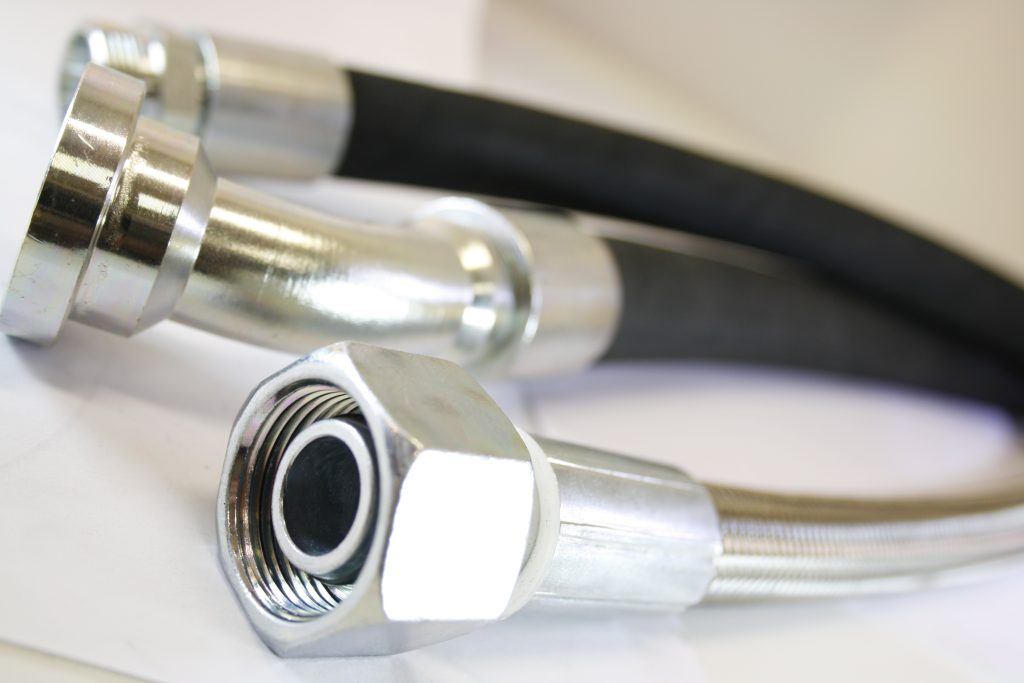
Selecting the right hydraulic hose is one of the most critical steps in designing and maintaining reliable hydraulic systems. An incorrectly chosen hose can lead to leakage, premature failure, production downtime, equipment damage and serious safety risks.
In industrial environments, hydraulic hoses are exposed to high working pressures, temperature fluctuations, vibration and dynamic loads. Therefore, hydraulic hose selection must be based on technical parameters rather than only diameter or nominal pressure rating.
Below we outline the key factors to consider when selecting hydraulic hoses for industrial applications.
1. Working Pressure and Safety Factor
The first and most important parameter in hydraulic hose selection is working pressure.
Maximum Working Pressure
Each hydraulic hose is rated for a maximum working pressure expressed in bar or MPa. The hose must be selected to handle the highest pressure expected in the system.
However, it is important to understand that system pressure is not always constant. In real operating conditions:
- system pressure may fluctuate during operation
- pressure peaks can occur during rapid valve actuation
- hydraulic shock loads may significantly increase stress on the hose
Impulse Pressure and Dynamic Loads
In industrial machinery, hydraulic hoses are often subjected to pressure impulses and cyclic loads. Over time, these impulses can lead to fatigue failure.
High pressure hydraulic hoses compliant with EN 853 and EN 856 standards are designed to withstand a defined number of impulse cycles, making them suitable for demanding industrial conditions.
Safety factor
Standard hydraulic hoses typically have a 4:1 safety factor (burst pressure is four times higher than the working pressure). This means that a hose rated at 250 bar working pressure has an approximate burst pressure of 1000 bar.
Proper sizing while respecting the safety factor is crucial for overall system safety.
2. Fluid and Ambient Temperature
Temperature significantly affects the durability and safety of hydraulic hoses.
It is necessary to consider:
- hydraulic oil temperature
- potential peak temperatures
- ambient temperature
- external heat sources
Standard hydraulic hoses are typically designed for a range from -40 °C to +100 °C, with short-term deviations. However, in specific industries (e.g., geothermal projects, proximity to engines or heat sources), special solutions may be required.
An improperly selected hose operating at elevated temperatures may:
- lose mechanical properties
- age more rapidly
- lose flexibility
- rupture under load
3. Type of Fluid and Material Compatibility
The most common medium in hydraulics is mineral oil, but industrial applications may also involve:
- synthetic oils
- biodegradable oils
- emulsions
- special fluids
The inner tube of the hydraulic hose must be chemically compatible with the fluid.
Incompatibility may result in:
- swelling of the inner tube
- material degradation
- leakage
- reduced service life
In projects with special requirements (e.g., food industry, chemical plants or specific geothermal systems), material selection becomes even more critical.
4. Minimum Bend Radius and Installation Conditions
One of the most common mistakes in practice is neglecting the minimum bend radius.
Each hydraulic hose has a specified minimum bend radius that must not be exceeded. Excessive bending causes:
- internal stress
- reinforcement damage
- reduced service life
- premature failure
It is also necessary to consider:
- vibration
- torsional loads
- mechanical damage
- abrasion
In more demanding industrial environments, additional hose protection (spiral guards, protective sleeves, reinforcements) is recommended.
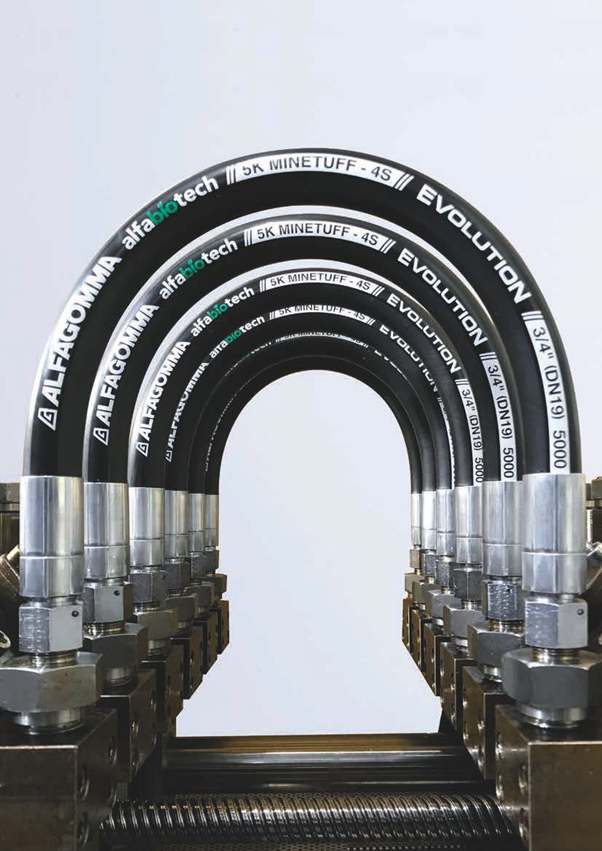
5. Standards: EN 853, EN 856 and Others
Standards define the construction, testing and mechanical characteristics of hydraulic hoses.
EN 853 (1SN, 2SN)
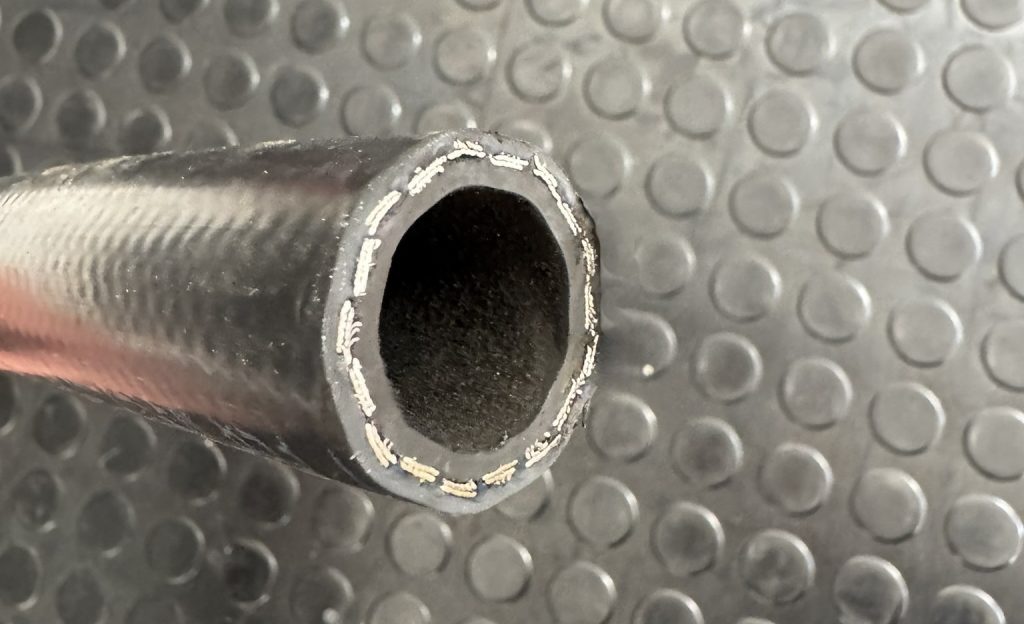
- 1SN – single steel wire braid reinforcement
- 2SN – double steel wire braid reinforcement
Application: medium to high pressure, wide industrial use.
EN 856 (4SP, 4SH)
- 4SP – four spiral wire reinforcement
- 4SH – heavy-duty construction for very high pressure
Application: heavy industry, mining installations, machinery with high load.
Understanding the differences between 1SN, 2SN, 4SP and 4SH hoses is essential for correct application.
6. When to Use 1SN, 2SN, 4SP or 4SH Hoses?
Simplified overview:
- 1SN – lakše industrijske primjene
- 2SN – standard industrial applications
- 4SP / 4SH – very high pressures and demanding operating conditions
However, actual selection depends on the combination of:
- pressure
- temperature
- dynamic load
- hose length
- installation method
Therefore, the system must always be evaluated as a whole, not based on a single parameter.
7. Why Proper Hose Assembly Is Essential
Selecting the appropriate hose is only the first step. Proper hydraulic hose assembly with fittings is equally important.
Assembly includes:
- selection of appropriate hydraulic fittings
- precise crimping according to manufacturer specifications
- dimensional control
- visual inspection
- pressure testing where required
Improper crimping may result in:
- fitting pull-off
- leakage
- premature failure
- safety incidents
In industrial applications, especially in railway systems, oil and geothermal equipment or high-pressure systems, controlled and documented hose assembly represents a critical safety component.

8. Pressure Testing and Quality Control
For more demanding projects, pressure testing of each assembled hose is recommended.
Testing enables:
- verification of leak-tightness
- inspection of connections
- additional safety before installation
In projects with specific technical requirements or international standards, documented quality control is often mandatory.

Most Common Mistakes in Hydraulic Hose Selection
In practice, the following mistakes are most common:
- selecting based on price rather than technical parameters
- neglecting impulse loads
- improper sizing
- ignoring minimum bend radius
- inadequate hose assembly
Such mistakes often result in costs significantly higher than the initial savings.
Conclusion
Hydraulic hose selection for industrial applications requires technical understanding of system operating conditions. Working pressure, temperature, fluid type, standards, bend radius and installation method must be considered as a whole.
Equally important is that hose assembly with fittings is performed professionally, with quality control and, where required, pressure testing.
A properly selected and professionally assembled hydraulic hose ensures reliable system operation, longer service life and operational safety.
Need Assistance with Hydraulic Hose Selection?
If you are unsure which hydraulic hose is suitable for your application or require professional hose assembly according to project specifications, our technical team is available to assist you.
We can help with:
- selecting the appropriate specification
- hose assembly and finalization
- pressure testing
- technical documentation
👉 Send us your inquiry via the contact form or contact us directly — we will be happy to assist.