EN
EN  HR
HR  RU
RU  DE
DE 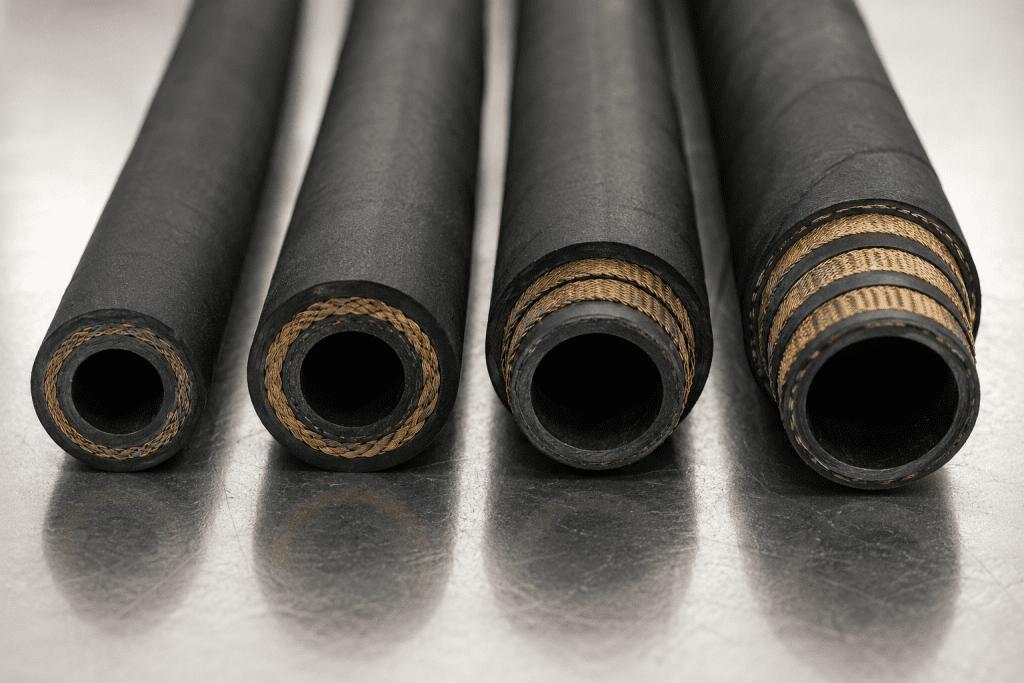
Hydraulic hoses are among the most important components of any hydraulic system. Whether used in industrial plants, construction machinery, agricultural equipment, mining operations or specialised applications such as geothermal and oil projects, selecting the correct hose is essential for safe and reliable system operation.
Among the most common hose designations found in technical documentation and manufacturer catalogues are 1SN, 2SN, 4SP and 4SH. Although these designations are frequently used, many users are not entirely familiar with their meaning and how to choose the right hose type for a specific application.
In this article, we explain the main differences between 1SN, 2SN, 4SP and 4SH hydraulic hoses, their construction, areas of application and the factors that should be considered during selection.
1. What Do the Designations 1SN, 2SN, 4SP and 4SH Mean?
The designations 1SN, 2SN, 4SP and 4SH are defined by the European standards EN 853 and EN 856 and describe the construction and mechanical characteristics of hydraulic hoses.
The main difference between these hose types lies in the type and number of reinforcement layers located between the inner tube and the outer cover.
The reinforcement is the structural component that enables the hose to withstand working pressure and impulse loads during operation.
In general:
- 1SN and 2SN hoses use braided steel wire reinforcement
- 4SP and 4SH hoses use multi-layer spiral steel wire reinforcement
- increasing the number and type of reinforcement layers increases pressure resistance and durability under dynamic loads
2. Construction Differences Between Hose Types
1SN Hoses
1SN hoses are manufactured with a single braided steel wire reinforcement layer.
Their construction consists of:
- an inner tube resistant to hydraulic oil
- one braided steel wire reinforcement layer
- an outer cover resistant to abrasion and environmental influences
Due to their simpler construction, 1SN hoses are lighter and more flexible compared to more heavily reinforced hose types.
2SN Hoses
2SN hoses feature two braided steel wire reinforcement layers.
Compared to 1SN hoses, they offer:
- higher pressure resistance
- improved resistance to impulse loads
- longer service life under demanding operating conditions
For this reason, they are among the most commonly used hydraulic hoses in industrial applications.
4SP Hoses
4SP hoses use four spiral steel wire reinforcement layers.
Unlike braided reinforcement, spiral reinforcement enables the hose to withstand significantly higher pressures and harsher operating conditions.
These hoses are commonly used in:
- construction machinery
- mining equipment
- hydraulic presses
- heavy industrial systems
4SH Hoses
4SH hoses represent an even more robust design intended for very high operating pressures.
They are characterised by:
- exceptional mechanical strength
- high resistance to impulse loads
- reliable performance under extreme conditions
As a result, they are frequently used in heavy industry, oil and geothermal projects and other demanding applications.
3. Working Pressure and Areas of Application
One of the most important factors when selecting a hydraulic hose is the system working pressure.
Although exact values depend on hose size and manufacturer specifications, the following generally applies:
- 1SN hoses are used for low to medium pressures
- 2SN hoses are used for medium to higher pressures
- 4SP hoses are used for high pressures
- 4SH hoses are used for very high pressures
It is important to note that hose selection should not be based solely on maximum working pressure.
Other factors must also be considered:
- impulse loads
- operating temperature
- hose length
- installation conditions
- safety factor
4. When Should 1SN and 2SN Hoses Be Used?
1SN and 2SN hoses are most commonly used in standard industrial hydraulic systems.
Typical applications include:
- manufacturing equipment
- industrial plants
- agricultural machinery
- mobile hydraulics
- maintenance equipment
1SN hoses often provide a cost-effective solution for less demanding applications.
2SN hoses are typically selected when higher pressures or more frequent load variations are present.
In many cases, 2SN hoses offer the optimal balance between cost, durability and performance.
5. When Should 4SP and 4SH Hoses Be Used?
4SP and 4SH hoses are intended for applications where standard braided hoses are not sufficient.
Their applications include:
- mining equipment
- heavy construction machinery
- hydraulic presses
- drilling equipment
- oil and geothermal projects
- high-pressure industrial systems
Thanks to their spiral reinforcement construction, these hoses can withstand substantial dynamic loads during continuous operation.
For this reason, they are often selected for systems where equipment downtime can result in significant financial losses.
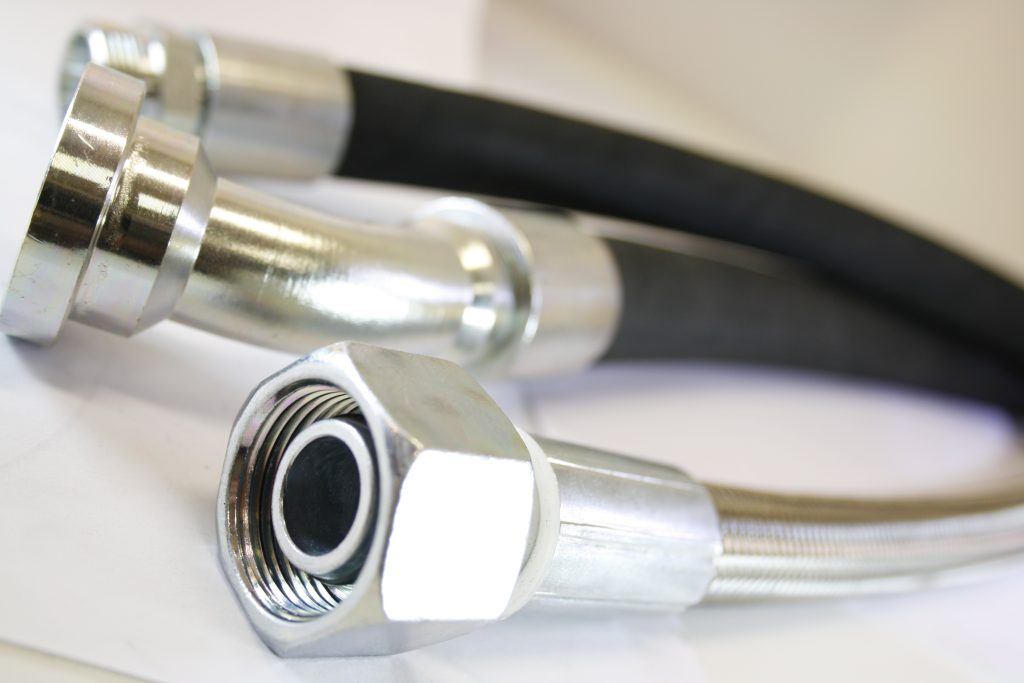
6. The Importance of Proper Hose Assembly and Crimping
Even the best hydraulic hose cannot achieve its intended performance if it is not assembled correctly.
Hydraulic hose assembly includes:
- selecting the appropriate fittings
- cutting the hose to the required length
- proper crimping according to manufacturer specifications
- dimensional inspection
- final visual inspection
Improper crimping may result in:
- leakage
- fitting pull-off
- reinforcement damage
- premature assembly failure
For more demanding projects, pressure testing of completed hose assemblies is recommended to verify performance before installation.
7. Most Common Mistakes When Selecting Hydraulic Hoses
The following mistakes are frequently encountered in practice:
Selecting Based on Price Alone
The lowest-cost solution is not always the most economical solution.
An unsuitable hose may lead to significantly higher costs through downtime and repairs.
Ignoring Impulse Loads
Many hydraulic systems experience short-term pressure peaks that place additional stress on the hose.
Incorrect Assessment of Operating Conditions
Temperature, vibration and installation conditions can have as much influence on hose performance as pressure.
Improper Hose Assembly
The quality of crimping and fitting selection is just as important as choosing the correct hose.
Conclusion
The difference between 1SN, 2SN, 4SP and 4SH hydraulic hoses primarily lies in the reinforcement construction, allowable working pressure and intended application.
While 1SN and 2SN hoses are suitable for most standard industrial applications, 4SP and 4SH hoses are designed for high-pressure and demanding operating environments.
When selecting a hydraulic hose, the entire system should be considered, including pressure, temperature, impulse loads and operating conditions.
Equally important is ensuring that hose assembly is carried out professionally and according to manufacturer specifications to guarantee long-term reliability and safety.
Need Assistance Selecting the Right Hydraulic Hose?
If you are unsure whether a 1SN, 2SN, 4SP or 4SH hose is the right choice for your application, our technical team is ready to help.
We can help with:
- selecting the appropriate specification
- hydraulic hose assembly with fittings
- pressure testing
- technical documentation
Send us an inquiry through our contact form or contact us directly. We will be happy to assist you.